

by Megan, A Mighty Fine Bakehouse
To start, I’m going to say the reason I’m doing a post on this subject is because I only realized I had this because I saw memes. Not because our society has an understanding of how this affects people. In sharing ADHD memes on my personal instagram, I’ve received so many messages from people who either see themselves in these snippets of ADHD life, or they have a family member who has it and they appreciate getting a better idea of what they are going through.
This post outlines how it can impact your life. It doesn’t address the why, although in his book about the subject, Shattered Minds, Gabor Mate suspects stress inutero and/or during the first few months of life can be the cause. In his instance, he says his mother fled the holocaust just before his birth — obviously a significant stressor — and that while heritable, it requires a trigger — the stress on his wife during pregnancy and infancy from being married to someone with ADHD was enough to trigger it in all his children. He believes up to a third of the population may have it as a result. But this is the extent of the information I have seen regarding a possible origin. Officially, the internet claims only 7% of children are diagnosed.
Having recently been diagnosed, the lens in which I look back on everything is much clearer. Struggling in school, in kitchens, in my personal life was just my life and though I knew something was off, I placed much blame on myself. I was lazy (because I had been told this growing up), I just wasn’t trying hard enough, I am stupid, I don’t like being around people, I don’t know how to be happy, I needed to motivate myself. Depression is just temporary, just a mindset. Just run. Just eat fruit. Just fold the laundry. Just go to bed and sleep for 8 hours. All these things are easy, right?
What is ADHD?
Someone I follow online (I can’t remember who) said the name Attention Deficit Hyperactivity Disorder is the worst name because all it does is describe the characteristic that irritates those who don’t have it. Whoa.
I would have never guessed this was my issue based on the name. In fact, while in University I was diagnosed Dyslexic, as many of the indicators are the same. I’d even read and repeated proudly that many people diagnosed ADHD are actually only Dylsexic. You can imagine how sheepish I felt when I realized I was not Dyslexic. I’d never considered ADHD because I’m not hyperactive. I’m quiet, I like quiet things like reading and knitting. I feel like a lump of clay when I sit down. I work a lot, but I was never the kid in school who can’t stop talking and squirms around in their seat, ignoring the teacher and causing a ruckus. That’s what people think ADHD is (for the record, the term ADD is no longer used; ADHD is the disorder, then there are three types: Impulsive/Hyperactive, Inattentive/Distracted, or Combined.)

ADHD is the underdevelopement of your prefrontal cortex. This is the brainy bit behind your forehead where all your fine skills are kept — the Executive Functions.
Executive Functions Include:
Time Management
Emotional Regulation
Organization
Prioritization
Planning
Decision Making
Working Memory
Rule Learning
Money Management
So ADHD presents as:
Being consistently late (people always say that being late is just a lack of respect for others, wow what a way to shame someone who literally does not experience time properly)
Dropping things or walking into objects
Becoming overwhelmed or emotional over seemingly small or inconsequential things
Disorganization
Inability to make a plan to achieve a goal
The ability to make a plan becoming overwhelmed in the process of prioritizing items to reach that goal, then giving up
Being unable to choose what to have for dinner or what to watch on tv
Forgetting to eat or drink for 10 hours, then binging because they are so hungry
Missing garbage day or having to rewash clothes because you forgot they were in the washer
Forgetting they bought food, ends up rotting in the fridge or going stale
Making spontaneous decisions without considering the consequences
Over spending or forgetting to pay bills or loans and being hit with NSF charges of increased interest charges
ADHD is also a chemical problem. We do not have the same Dopmaine levels neurotypicals have. This means when we do something, like open a bakery or get a promotion, instead of feeling proud and accomplished, we just feel the same as we always do. Or we feel like we still aren’t good enough. Maybe we feel fraudulent. The chemical reward isn’t there, which maybe means we choose to not do things because we still feel empty inside.
Rick Green, the Comedian who wrote the Red Green Show and History Bites, said despite all the awards he’d won from his work, he never felt satisfied or proud or accomplished. His ADHD didn’t allow it. He’d workworkwork and everyone would say “congratulations, you’re amazing!” and he’d be like huh? I didn’t do anything special. (This was the moment I went to his website and took his quiz, then spoke with my doctor.)
Memory issues plague us. We remember everything we’ve hyperfocused on, but forget simple things like names, dates, appointments. We miss payments. It can get expensive. We also don’t do simple things like respond to an email as our brains don’t remember how easy they are, so it’s common for us to appear “lazy” when we don’t complete simple everyday tasks. We are frozen (in a burn out mode) or we think the task is gargantuan when we’ve really just forgotten how quick it will be. Of course, we will also get almost no chemical reward from folding the laundry so we scroll on our phones because scrolling gives us the dopamine we crave.
ADHD can also cause sleep problems. Many of us have a delayed release of melatonin so we naturally stay up late into the night, and that’s often when we do our most creative work or end up hyperfocusing on something. Attempting to keep up with the rest of society leaves us exhausted, not only because we don’t get enough sleep, but our life is, as someone else described it, set to “hard” mode.
“Attention Deficit” — this indicates we are off in our own world, which we may be, but it doesn’t explain why. The Why is because either our brains are moving so quickly we are thinking about something else (or many things), or we are bored and looking for stimulation. Boredom is a problem for us because our brains, again due to that chemical imbalance, do not take kindly to low stimulation. We need to be Doing all the time, unless we burn out and discossiate because we’ve run out of energy. This is why we often like junk food — hyperpalatable things like salt and sugar, and textured stuff like crunchy things. These are stimulants that actually impact our brains, whereas most things leave us bored.
When we saw the Roadrunner documentary, watching it through this ADHD lens had me realizing that Anthony Bourdain could have had ADHD, just as many people in this industry may be undiagnosed ADHD. Turns out, people who have it also tend to change jobs often, a common industry problem.
Bourdain’s mental health as shown through the film was similar to mine (and Graham’s). Desire to experience adrenaline rush (as a result of low natural dopamine levels and near constant boredom), needing addiction to fuel everyday existence (often too much coffee, drugs, cigarettes, over or under eating, sometimes both — an ADHD expert told me she believes if someone drinks *many* cups of coffee they are likely undiagnosed since the key to brain boredom is stimulants, hence Ritalin and Adderall) to provide something consistent and habitual as well as intense stimulation. Depression, imposter syndrome, feeling as though you’ve accomplished nothing when you are actually successful, inability to manage money, to finish tasks, feeling as though you are perpetual outsider in this world. Classic ADHD.
It turns out, the restaurant life and it’s ability to cannibalize your time is the perfect way to hide the fact that you probably couldn’t bring yourself to take out the recycling or do laundry, or go to the bank, to make clear financial decisions, book doctor’s appointments, or show up on time to meet people. These things are impossible when you work 70+ hours a week, but likely we’d find them impossible if we only worked 40 — we just don’t know we are incapable due to this stunted brain development because we all we do is work/drink/sleep.
I found the structure in kitchens to be just what I needed to keep me on track; especially in kitchens that adhered to the militaristic regimen, the organization helped me maintain focus and stay clean. Fear of being fired kept my focus on my work, worrying about how I’d pay rent or my student loans kept me going back day after day, taking on more responsibility, more work, staying late, arriving early.
Hyperfocusing, or obsession, is a common in ADHD. You discover a thing you want to know about and you deep dive into the thing. We talk only about the thing and think about it constantly, trying to use our energy stores to learn more about the thing. Eventually we become bored or distracted, which is why we often find new hobbies or projects then quickly abandon when we either hit an organizational roadblock or become distracted by another interesting thing.
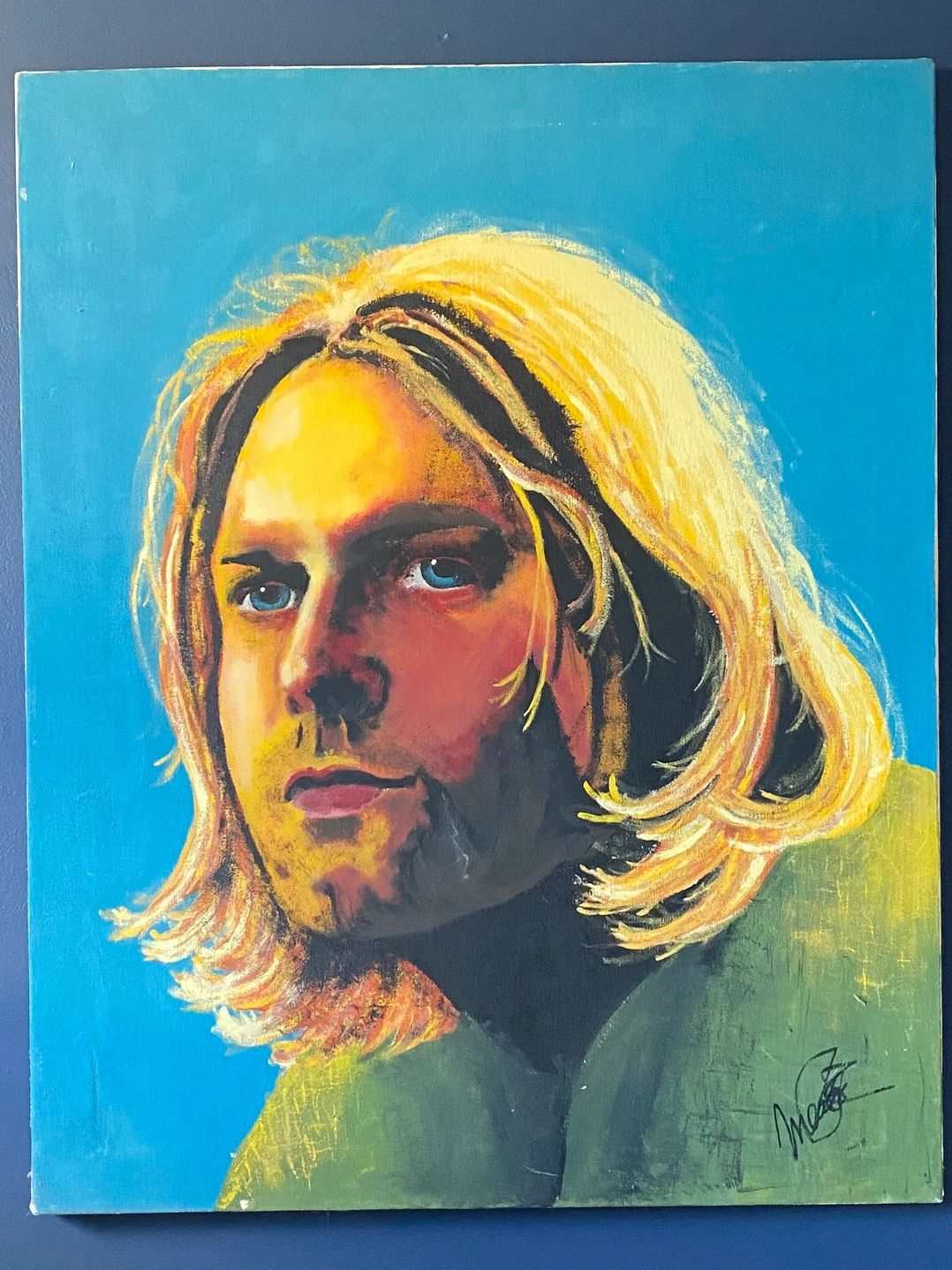
As a teen, I painted. I would start painting in the evening and just paint until it was finished, often 10 hours later. No eating, no breaks. Just painting. But after about 12 paintings, I didn’t want to do it anymore because I didn’t think I had any talent or skill. During school, I didn’t pay attention, opting to write screenplays or a novel, a great cover for taking notes. My grades were terrible. One teacher passed me because he didn’t want me to take his class again. Another ignored that I was doing algebra correctly, just mixing up the numbers which gave incorrect answers, so I was a regular at summer school. I happily took in horror and dystopian fiction but *skimmed* the Cole’s Notes for Shakespeare and The Great Gatsby.
In university, my grades improved significantly, although I couldn’t manage to write an essay over several weeks as one does. I would instead attempt to start, get bored immediately, then the night before the due date, around 10pm I would finally start manically researching. Reaseaching. I’d start writing around 3am, go until 9 taking short naps as needed, have it delivered by 1pm. I maintained an A average. My poor organization, time management, and hyperfocus were always rewarded. And it made me feel like a fraud. When I would go to the library to do readings (you know, for better focus), I’d read for ten minutes and feel exhausted. So I’d take a quick nap. It was a cycle. Read ten minutes, nap ten minutes. Can you imagine going through a degree doing that? I had no idea I was just so intensely bored.
Oh, and how many departments was I in? I majored in Media Communication, but I’d changed my minor to Philosophy, Linguistics, English, and almost Politics, but settled on Psychology. We will jump from interest to interest, stopping for only as long as our attention allows us.
After spontaneously graduating University during a 4 month bout of depression mixed with bronchitis when I couldn’t attend class, I hyperfocused on learning to bake. I was writing applications for the government when I realized there was a culinary school just a twenty minute walk from my apartment, so instead of applying to the government I applied to Culinary School. I hyperfocused on French pastry, working 35 hours a week at a cafe while attending Le Cordon Bleu, then also got a job at night in a restaurant. When I wasn’t working or at school or commuting, I practised piping or making choux or macarons until 2am every night. After that I hyperfocused on bread, and then croissants. ADHD is why I have the career I have.
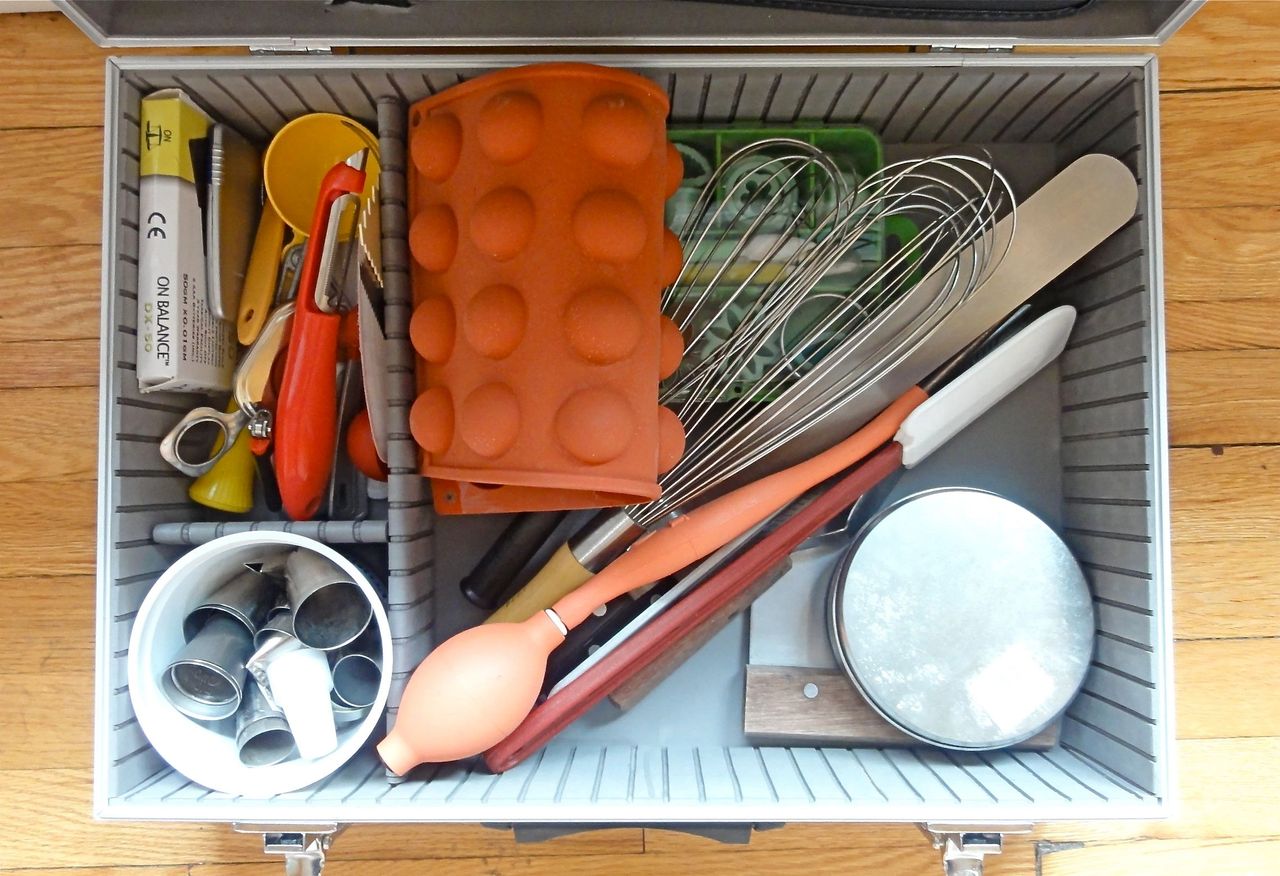
This is also the reason Graham is here. His ability to cut veg at the rate he can is due to hyperfocus on knife skills, spending hours at home cutting potatoes and onions. The industry rewarded his obsession with knives through promotions over the years, and also huge prep lists which may not seem like a reward, but for the ADHD brain, the stress a long prep lists gives you the dopamine it craves, assuming you can get it done. The high when you’ve finished your list feels more like coming in first in a race. In restaurants, you finish your list, feel invincible, go for a cigarette, then the dinner rush starts and you cook for four hours at an intense pace, clean all the things, have a beer with the kitchen, then trundle home to collapse for 5 hours. Do it again the next day.
In other words, ADHDers work best under intense pressure, and often have high pressure jobs.
When I was struggling getting through my prep list working at Le Cordon Bleu’s restaurant, I brought a clock in to sit on my station. Not a small timer or a travel clock, like a big wall clock. They thought I was nuts. But I wanted to get each task done in ten minutes, and I thought I just needed to try hard enough. I couldn’t. It was more like 40 minutes a task. I don’t even know how long a neurotypical person would take to do these things now. From my spot in the kitchen it always seemed as though everyone else was zipping across a lake on a power boat while I just tread water trying to figure out what was happening.
I’ve realized Graham and I work the way our dog, who is a puggle, handles the park: she runs and runs and runs until she collapses. She lays on the ground, legs sprawled, gigantic tongue attempting to cool everything, eyes glazed over. Then, after a two minute break, she’s up again and screaming for us to throw the ball or zipping off to chase a boarder collie until she collapses again.

Every night while doing prep, after I’ve promised myself I will “finish on time” or “get everything done early” (my goal is always 7pm for some reason), and every night when 7 rolls around I am hit with a sense of doom and failure, thinking to myself I’ll never be better, I’ll never be happy, I’ll never be normal, never finish work with time to have dinner with my husband, take the dog for a walk, read a bit before bed and get 8 hours of sleep. Depending on the day, I’ll cry about it. Everything seems so hopeless and pointless. There is no chemical reward for making all the baked goods I make. I just do things and then I don’t for a bit, then I do again.
When I started writing this I didn’t have much of an understanding of how ADHD has affected me. I placed blame on myself for always working too slowly and needing to work 15 hour days, choosing to not take breaks, to not nourish myself, to not drink water that didn’t have coffee in it. I was choosing to stay up late working on projects, choosing to not take the recycling out, choosing to lament over how little I’ve done with my life.
These aren’t choices. I am simply working with what I’ve got. It’s not great, y’all. So, if you know someone who is clumsy and bad with money and tired and late all the time and a general mess of a person, they may just be living life on “Hard” and not even know it.

